APM for Wind Energy: How Delfos Empowers Wind Operators to Maximize Asset Performance
Discover how Delfos APM helps wind operators detect, analyze, and optimize turbine performance with predictive insights and subsystem‑level diagnostics.
Wind asset operators face a constant battle: maintaining high turbine availability while minimizing losses due to underperformance or component failures. For key roles such as Asset Managers, Portfolio Managers, Maintenance Managers, and even CEOs overseeing large renewable portfolios, the inability to detect and act on performance issues early often translates into revenue leakage, higher O&M costs, and unreliable forecasts.
That’s where Delfos’ APM (Asset Performance Management) module for wind energy steps in. Built to provide data-driven findings on turbine-level behavior, APM turns complex operational data into precise, decision-ready intelligence, enabling proactive management of wind assets.
In this blog, we explore how the APM module works, why it matters, and what sets it apart in the landscape of wind performance management.
Why APM for Wind Energy Is Critical
Turbine performance is never static. Aging components, varying site conditions, mechanical faults and control software versions often lead to subtle efficiency losses that go unnoticed until significant revenue is lost. Traditional monitoring systems, which rely heavily on SCADA alarms or power curve analysis alone, fall short of providing a complete picture.
Delfos' APM tackles this head-on by combining automatic detection, root-cause analysis, and subsystem-level diagnostics, allowing operators to not only react but anticipate performance degradation.
What is Delfos APM?
The Asset Performance Management (APM) module is a specialized feature within the Delfos Wind suite designed to monitor, analyze, and enhance the performance of individual wind turbines.
Unlike generic dashboards or static reports, APM:
Identifies and prioritizes underperforming turbines over a selected period, giving teams clarity on where to act first;
Provides performance projections for the upcoming year, based on real operational data;
Allows automatic alerts when a turbine’s output falls below expected performance;
Offers subsystem-level visibility, analyzing key components like: - Pitch system - Yaw system - Electrical generator
Supports root cause investigations, creating intelligent alarms based on subsystem behavior/underperformance.
With this deep granularity, operators can move from reactive maintenance to data-driven performance optimization.
Delfos APM operates as a fully integrated module within the Delfos platform, using historical and real-time data to surface key insights:
Turbine Prioritization Engine APM continuously scans fleet performance and ranks turbines by deviation from expected performance.
Predictive Performance Modeling Leveraging recent data, the module estimates next-year performance for each turbine, supporting maintenance scheduling and production forecasting.
Anomaly & Alarm Detection The system generates alerts when performance dips below statistical thresholds, prompting immediate investigation.
Subsystem Behavior Analysis By focusing on the behavior of core systems (pitch, yaw, and generator) APM reveals why a turbine is underperforming, not just that it is.
Root Cause Investigation Tools (with the Performance Engineering service) Performance alarms are coupled with dynamic subsystem data, guiding engineers toward corrective actions.
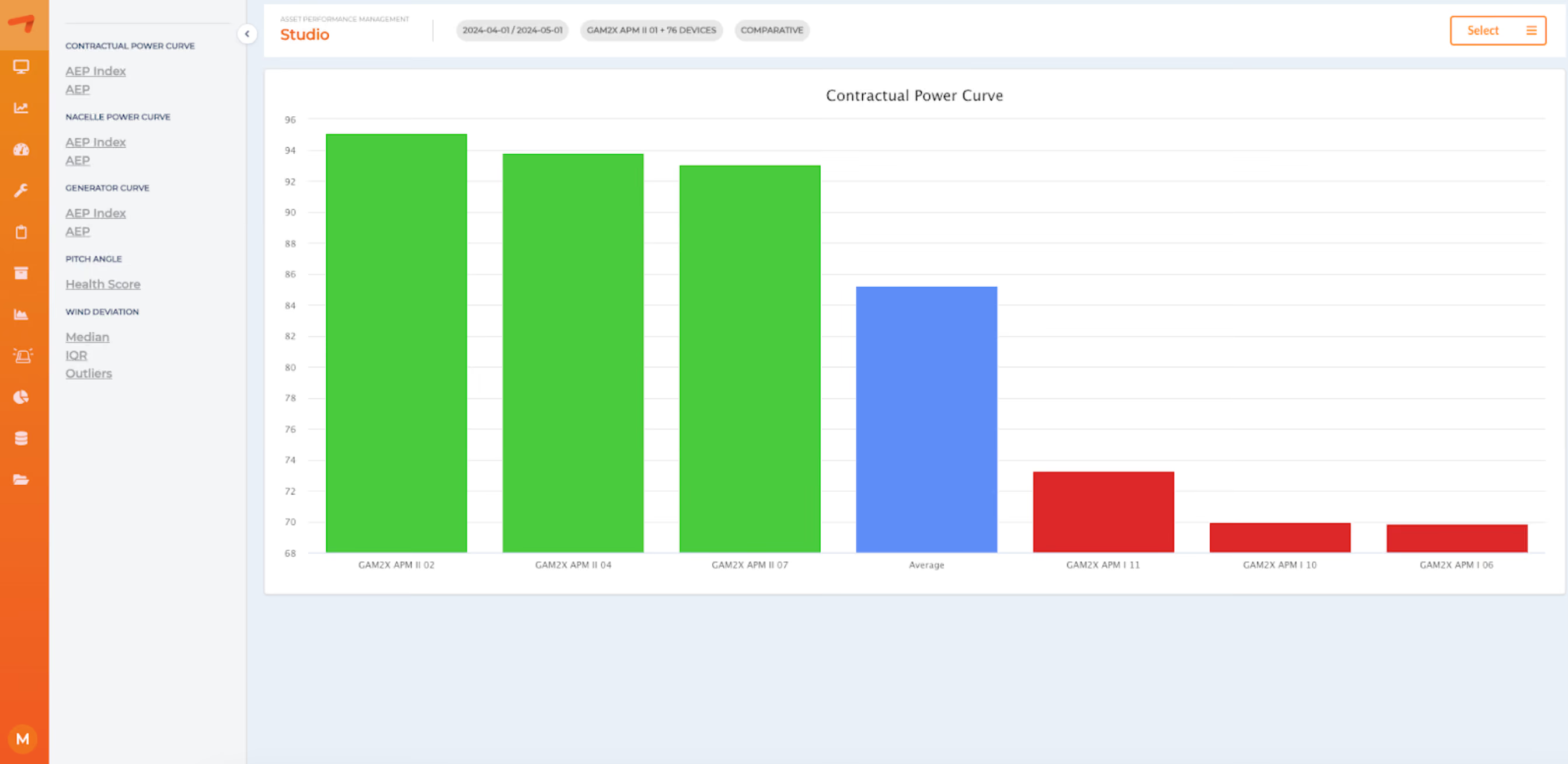
APM - Contractual Power Curve
Real-World Benefits for Wind Operators
Using Delfos APM translates into measurable advantages:
Faster issue detection: No need to wait for monthly reports as APM flags problems as they occur.
Better resource allocation: Maintenance and asset teams can focus on turbines that require intervention.
More accurate forecasts: Forward-looking performance projections help align operational planning with business targets.
Lower O&M costs: Early diagnosis prevents minor inefficiencies from escalating into major failures. From the first day after a corrective intervention, you can already use the tool to monitor whether performance is returning to expected levels.
Increased profitability: By optimizing every turbine, APM helps unlock untapped revenue potential.
In short, Delfos APM is purpose-built for proactive, high-resolution asset management—not just monitoring.
Proactive Wind Asset Optimization Starts Here
Delfos APM is more than just a dashboard, it's a critical tool for wind energy leaders who aim to extract maximum performance from their assets. Whether you're a Maintenance Manager ensuring turbine uptime or a CEO steering a renewable portfolio, the APM module equips you with the insights needed to act faster, plan better, and grow smarter.
FAQ
What is Delfos Asset Performance Management (APM) for wind energy?
Delfos APM is a specialized module within the Delfos Wind platform that monitors, analyzes, and optimizes the
performance of individual wind turbines across a fleet, turning complex operational data into decision-ready
intelligence for wind asset owners and operators.
Unlike generic dashboards or static reports, Delfos APM:
Identifies and prioritizes underperforming turbines over a selected period.
Provides performance projections for the upcoming year based on real operational data.
Triggers automatic alerts when turbine output drops below expected performance.
Delivers subsystem-level visibility into pitch, yaw, and the electrical generator.
Why do wind farm operators need an APM solution like Delfos?
Wind turbine performance is dynamic: aging components, changing site conditions, mechanical faults, and control
software versions cause subtle efficiency losses that often go unnoticed until revenue is already lost.
Traditional monitoring based only on SCADA alarms or power curve analysis does not give a complete picture.
Delfos APM combines automatic detection, subsystem diagnostics, and root-cause insights so operators can
anticipate performance degradation instead of reacting late to it.
How does Delfos APM work?
Delfos APM runs as an integrated module in the Delfos platform, using historical and real-time data to surface
the turbines and issues that matter most.
Turbine prioritization engine: continuously scans fleet performance and
ranks turbines by deviation from expected behavior.
Predictive performance modeling: estimates next-year performance for
each turbine, supporting maintenance scheduling and production planning.
Anomaly and alarm detection: generates alerts when performance falls
below statistical thresholds.
Subsystem behavior analysis: focuses on pitch, yaw, and generator
behavior to show why a turbine is underperforming, not just that it is.
Who is Delfos APM designed for within a wind energy business?
Delfos APM is designed for decision-makers responsible for wind asset performance, including:
Asset Managers and Portfolio Managers overseeing large wind portfolios.
Maintenance and Operations Managers focused on turbine availability and uptime.
CEOs and executives who need reliable production forecasts and performance visibility.
By providing high-resolution insights at turbine and subsystem level, Delfos APM supports both day-to-day O&M
decisions and long-term portfolio strategy.
How does Delfos APM detect and prioritize underperforming turbines?
Delfos APM continuously compares actual turbine output against expected performance, allowing operators to see
which machines are deviating the most and should be addressed first.
The module:
Ranks turbines over a selected period by performance deviation.
Raises automatic alarms when output falls below defined statistical thresholds.
Links alarms with subsystem behavior, helping teams quickly understand where to focus investigations.
Which wind turbine subsystems does Delfos APM analyze?
Delfos APM offers subsystem-level visibility so operators understand the technical drivers behind performance
losses. The module analyzes key systems such as:
Pitch system.
Yaw system.
Electrical generator.
By tracking these subsystems over time, Delfos APM helps distinguish between control issues, mechanical
degradation, and other root causes of underperformance.
How does Delfos APM support root-cause analysis and corrective actions?
Delfos APM couples performance alarms with dynamic subsystem data, guiding engineers toward the most likely root
causes of underperformance.
When combined with the Delfos Performance Engineering service, the module helps teams:
Investigate subsystem behavior leading up to an alarm.
Define corrective actions based on data, not assumptions.
Monitor from the first day after a corrective intervention to confirm whether performance is returning to
expected levels.
How does Delfos APM improve wind farm production forecasts?
Delfos APM uses recent operational data from each turbine to produce forward-looking performance projections for
the next year.
These projections help align maintenance scheduling, operational planning, and business targets, making
production forecasts more realistic and less exposed to hidden performance losses.
What operational and financial benefits can Delfos APM deliver?
Using Delfos APM leads to measurable improvements in both operations and financial performance:
Faster issue detection: problems are flagged as they occur.
Better resource allocation: maintenance teams focus on turbines that
truly require intervention.
More accurate forecasts: performance projections align operational
planning with business goals.
Lower O&M costs: early diagnosis prevents small inefficiencies from
becoming major failures.
Increased profitability: by optimizing each turbine, Delfos APM helps
unlock untapped revenue potential.
How does Delfos APM compare to traditional SCADA or power curve monitoring?
Traditional approaches rely heavily on SCADA alarms or isolated power curve analysis, which often miss subtle,
long-term efficiency losses.
Delfos APM goes further by combining:
Continuous fleet-wide performance ranking.
Predictive performance modeling for each turbine.
Subsystem-level diagnostics for pitch, yaw, and generator behavior.
Root-cause oriented alarms that guide engineers directly to the source of underperformance.
This makes Delfos APM a proactive asset performance management solution rather than a simple monitoring layer.
Aspect
Traditional monitoring (SCADA / power curve only)
Delfos APM for wind energy
Detection approach
Mostly reactive, based on alarms or monthly reports after losses have already occurred.
Proactive, with continuous scanning and automatic detection of performance deviations.
Performance view
Focused on individual signals or simple power curve checks, often missing subtle degradation.
Turbine-level performance ranking plus subsystem behavior to reveal underlying causes.
Forecasting
Limited support for long-term production forecasting based on detailed performance history.
Next-year performance projections for each turbine using real operational data.
Subsystem insights
Little or no structured visibility into pitch, yaw, and generator behavior.
Subsystem-level diagnostics that link alarms with pitch, yaw, and generator performance.
Impact on O&M
Harder to prioritize work orders and validate corrective actions in real time.
Clear prioritization, guided root-cause analysis, and post-intervention performance tracking.
See how Delfos APM can unlock hidden performance in your wind portfolio.
By clicking “Accept all cookies”, you agree to the storing of cookies on your device to enhance site navigation, analyze site usage, and assist in our marketing efforts. View our Privacy Policy for more information.