Predictive Maintenance for Wind: How Delfos Is Reducing Failures and Downtime With AI
Discover how Delfos' Prediction Module uses machine learning to detect early faults in wind turbines, reduce downtime, and optimize O&M performance.
In wind energy operations, unplanned downtimes and unexpected component failures can severely impact production targets and financial performance. Asset Managers, Maintenance Managers, Portfolio Managers, and even CEOs of renewable portfolios are often faced with the difficult task of ensuring expected production while wind farms experience various types of failures. Also, the reactive maintenance of these failures faces challenges in terms of having spare parts and labor available for repairs.
One of the key enablers of operational excellence in wind is predictive maintenance, and this is exactly where the Prediction module by Delfos becomes indispensable. This blog post explores how this AI-powered feature is transforming fault detection and maintenance strategies for wind portfolios.
Why This Matters
Traditional alarms are reactive, so they only warn when the problem has already occurred and their action directly impacts production with downtime and limitations. They can overlook the nuanced, asset-specific signs of early degradation or failure in turbines. For large-scale operators, this translates into:
Higher maintenance costs;
Increased unavailability;
Reduced ROI from underperforming assets.
Predictive maintenance, on the other hand, offers a path to proactive, data-driven and condition-based O&M, but only when powered by accurate and asset-specific insights. This is where Delfos’ Prediction module delivers a significant edge.
What Is the Prediction Module?
The Prediction module is an advanced machine learning-based functionality within Delfos’ Wind suite, purpose-built for early fault detection in wind assets. Unlike generic alert systems, it uses custom-trained models on SCADA data for each turbine, making it highly personalized and asset-specific.
Key capabilities include:
Monitoring eight systems within the WTG, including the critical rotor, gearbox, and generator systems.
Detection of subtle anomalies and behavioral deviations in uptime;
Identification of operational patterns that could indicate sensor failures or impending component issues.
It significantly strengthens the predictive layer of asset health monitoring, reducing reliance on reactive maintenance.
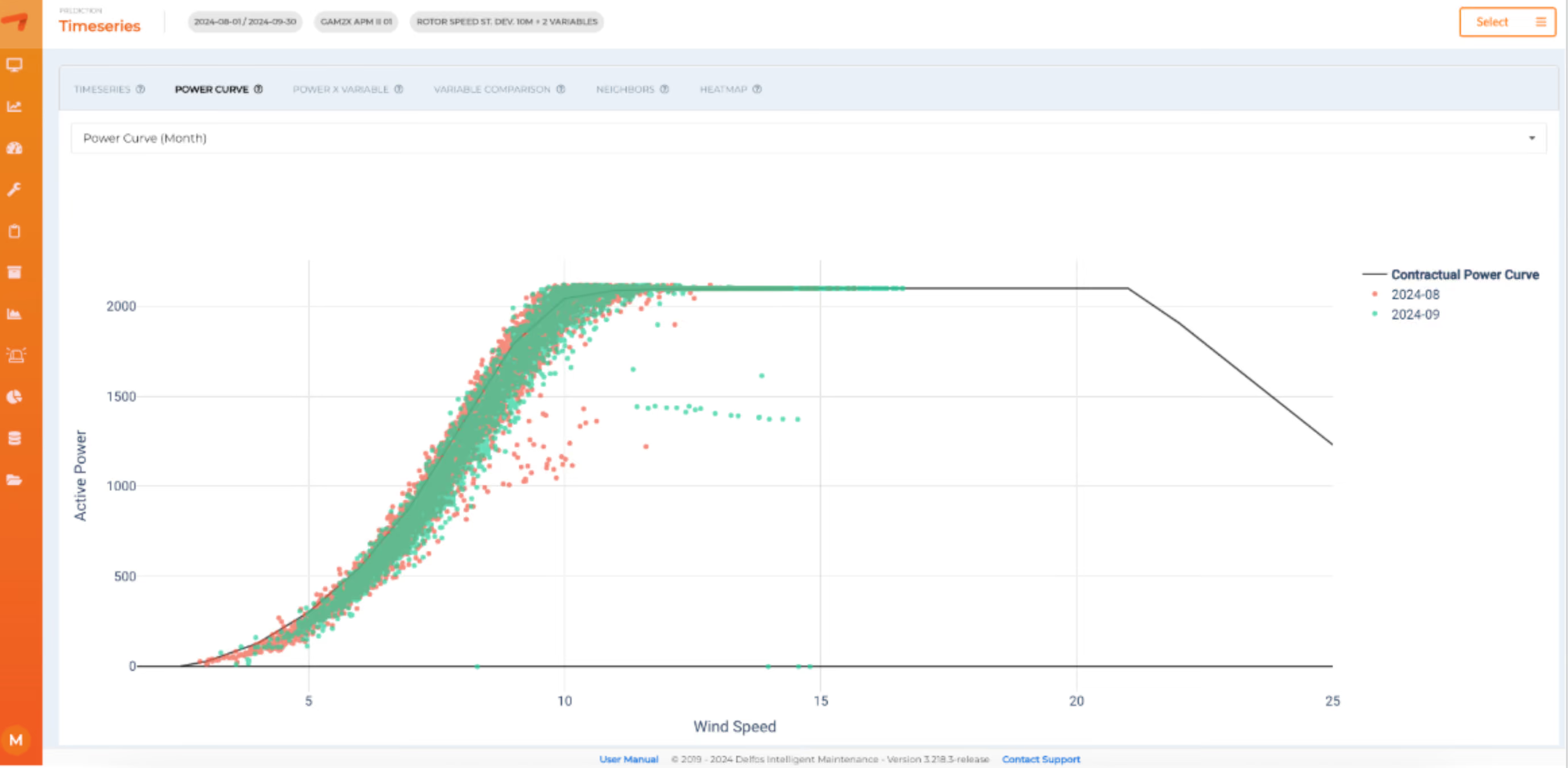
The Prediction module continuously analyzes the behavior of key turbine variables, comparing predicted vs. actual data to detect deviations beyond Delfos models' uncertainties. This is done through five specialized submodules that empower users to:
Receive a list of recent deviations spotted by the software;
Identify root causes of anomalies via temporal and spatial patterns;
Visualize and compare neighbouring turbines.
Its machine learning engine evolves over time: The engine is flexible enough to accommodate new models, based on data or business rules, and is capable of identifying new failure modes.
Business & Technical Impact
Implementing the Prediction module translates into tangible improvements in operational efficiency for wind asset operators:
Reduced unplanned downtime by catching anomalies before they become failures;
Lower maintenance costs through proactive scheduling (with more time and more information;
Improved asset reliability thanks to evolving, high-quality predictive models;
Extended equipment life through timely interventions and better decision-making.
Our models also allow you to assess the effectiveness of maintenance actions, helping determine whether an intervention truly resolved the underlying issue.
For executives managing multi-asset portfolios, this means greater visibility, control, and ROI. Plus, an approachable plan to improve metrics such as MTBF and MTTR
Real-World Application
Operators using Delfos’ Prediction module benefit from comprehensive visualizations, intelligent alerts, and root-cause diagnostics that support operational, technical, and strategic decisions. Whether used by a Head of Asset Management to define maintenance strategies or a Maintenance Manager to act on alerts, it bridges the gap between data overload and actionable insight.
Delfos Differentiator
What sets Delfos apart is its asset-specific predictive modeling. Unlike one-size-fits-all systems, Delfos builds models tailored to each turbine’s SCADA behavior, enabling precise fault detection and minimizing false positives. The frequency and volume of information are carefully calibrated by our experts to ensure relevance — avoiding the overload that can hinder decision-making during operations.
Compared to solutions from other players, Delfos provides greater model transparency, customization, and maintenance readiness, aligning with both field teams and executive decision-makers.
The Prediction module is not just a feature: it’s a strategic advantage for wind energy companies aiming to optimize asset health, reduce operational risks, and adopt a smarter O&M model. Whether you're transitioning to primary maintenance, have already migrated, or are working with third-party O&M providers, Delfos empowers you to enhance delivery standards and turn predictive maintenance into a tangible reality.
FAQ
What is predictive maintenance for wind turbines and why does it matter?
Predictive maintenance for wind turbines uses data and AI models to detect early signs of component degradation so you can act before a failure happens.
With Delfos' Prediction module, wind operators move from reactive, alarm-based maintenance to a proactive and condition-based approach. By spotting anomalies ahead of time, Delfos helps reduce unplanned downtime, avoid production losses and keep maintenance budgets under control while protecting overall ROI.
What is Delfos' Prediction module?
Delfos' Prediction module is an AI and machine-learning based feature within the Delfos Wind suite, built specifically for early fault detection in wind assets.
Unlike generic alert systems, it trains asset-specific models on SCADA data for each turbine. These models monitor eight systems in the wind turbine generator (WTG), including the critical rotor, gearbox and generator, to detect subtle anomalies and behavioral deviations that typical alarms fail to capture.
How does the Delfos Prediction module work in practice?
The Prediction module continuously compares predicted versus actual values of key turbine variables and flags deviations that exceed Delfos models' uncertainties.
Through five specialized submodules, users can:
• Receive a prioritized list of recent deviations detected by the software;
• Identify root causes using temporal and spatial patterns across the wind farm;
• Visualize and compare neighbouring turbines to see where behavior diverges.
The underlying machine-learning engine is designed to evolve over time, accommodating new models based on data or business rules and recognizing new failure modes as more operational history is collected.
Which wind turbine systems and issues can Delfos detect early?
Delfos' Prediction module monitors eight key systems within the WTG, including rotor, gearbox, generator and other critical subsystems.
By tracking behavior in uptime and cross-checking predicted versus actual performance, Delfos can highlight subtle anomalies that may indicate sensor failures, abnormal operating conditions or emerging component issues. This early insight allows maintenance teams to act before those patterns evolve into full failures.
How does Delfos predictive maintenance reduce downtime and maintenance costs?
Delfos reduces downtime and costs by giving O&M teams more time and better information to plan interventions.
When anomalies are detected early, you can schedule repairs proactively, secure spare parts, and allocate labor before a turbine trips or fails. This leads to fewer unplanned stoppages, more efficient work orders, improved asset reliability and extended equipment life. Delfos models also help evaluate the effectiveness of maintenance actions, indicating whether an intervention actually resolved the underlying issue.
How is Delfos different from traditional SCADA alarms or reactive monitoring?
Traditional alarms are reactive and often trigger only after a fault has impacted production, while Delfos delivers asset-specific, AI-based predictions before failure.
The comparison below summarizes how Delfos' Prediction module goes beyond conventional SCADA alarms:
Aspect
Traditional SCADA alarms
Delfos Prediction module
Trigger timing
Alerts usually appear after thresholds are exceeded or a fault is already affecting availability.
Flags early deviations between predicted and actual behavior, often before any visible failure.
Insight level
Generic, asset-agnostic alarms with limited context for root-cause analysis.
Asset-specific models reveal patterns and deviations on each turbine, supporting root-cause diagnosis.
Data approach
Mainly static rules and setpoints applied across assets.
Machine-learning models trained on each turbine's SCADA history and operating profile.
Impact on operations
Higher unavailability, reactive work orders and rushed planning of parts and crews.
Reduced unplanned downtime, better maintenance scheduling and improved asset reliability.
Information volume
High number of alerts and noise, which can overload control rooms.
Calibrated frequency and volume of information to keep alerts relevant for decision-making.
By combining early fault detection with tuned alert volume, Delfos helps teams focus on the most relevant insights and translate data into concrete O&M actions.
Who in my organization benefits most from using Delfos?
Delfos supports the entire wind operations chain, from field technicians to executives managing renewable portfolios.
Asset Managers and Maintenance Managers use the Prediction module to plan interventions and prioritize work orders. Portfolio Managers and CEOs gain greater visibility and control over performance, risk and ROI across multiple wind farms. Delfos acts as a bridge between data, operations and strategy, aligning technical decisions with business goals.
Which KPIs and business outcomes can Delfos help improve?
Delfos directly supports higher availability, lower maintenance costs and longer equipment life for wind assets.
By strengthening the predictive layer of asset health monitoring, it helps operators improve key metrics such as MTBF (Mean Time Between Failures) and MTTR (Mean Time To Repair). For executives managing multi-asset portfolios, Delfos also contributes to better ROI by reducing underperformance, unplanned downtime and operational risk.
How does Delfos support different O&M strategies and providers?
Delfos adds a flexible predictive layer that strengthens any O&M model, whether in-house or through third parties.
Operators transitioning to primary maintenance, those that have already migrated and those working with third-party O&M providers can all rely on Delfos to standardize predictive insights. The platform brings model transparency, customization and maintenance readiness, ensuring that field teams and executives share the same AI-driven view of asset health when defining and executing maintenance strategies.
How can I start using Delfos for predictive maintenance in my wind portfolio?
The first step is to request a Delfos demo and assess how the Prediction module can be applied to your wind portfolio and SCADA data.
From there, Delfos focuses on configuring asset-specific models and alert strategies that fit your current O&M processes. This enables a practical transition from reactive to predictive maintenance, turning AI-powered fault detection into a day-to-day reality for your operations team.
By clicking “Accept all cookies”, you agree to the storing of cookies on your device to enhance site navigation, analyze site usage, and assist in our marketing efforts. View our Privacy Policy for more information.