
Renewable Energy Trends in Europe for 2026

By 2026, Europe will no longer be discussing whether the energy transition will happen, but how efficiently it can be operated. After years of accelerated renewable capacity additions driven by energy security concerns, the European power system enters a phase of operational maturity, where grid constraints, flexibility, curtailment and cost of capital become as critical as megawatts installed.
This shift is strongly shaped by policies such as REPowerEU, Fit for 55, and the entry into force of the Carbon Border Adjustment Mechanism (CBAM). Together, they redefine how renewable assets are planned, financed, operated and monetized across the continent.
Understanding the renewable energy trends in Europe for 2026 is now essential for O&M leaders, asset managers and operators seeking predictable performance and bankable results in an increasingly complex system.
Europe’s energy transition enters its operational phase
According to the European Commission’s REPowerEU roadmap, Europe is moving decisively away from fossil fuel dependency toward a structurally decarbonized energy system. By 2026, renewable penetration in electricity markets continues to rise sharply, particularly driven by solar PV, while wind power remains central to long-term supply security.
However, this rapid expansion has exposed a structural challenge: the power system is not expanding uniformly. Generation grows faster than transmission, interconnection and flexibility resources, creating operational stress points that directly affect asset performance.
In this new phase, value migrates from sheer capacity ownership to operational excellence, data quality and system-level visibility.
Grid congestion and curtailment become structural risks
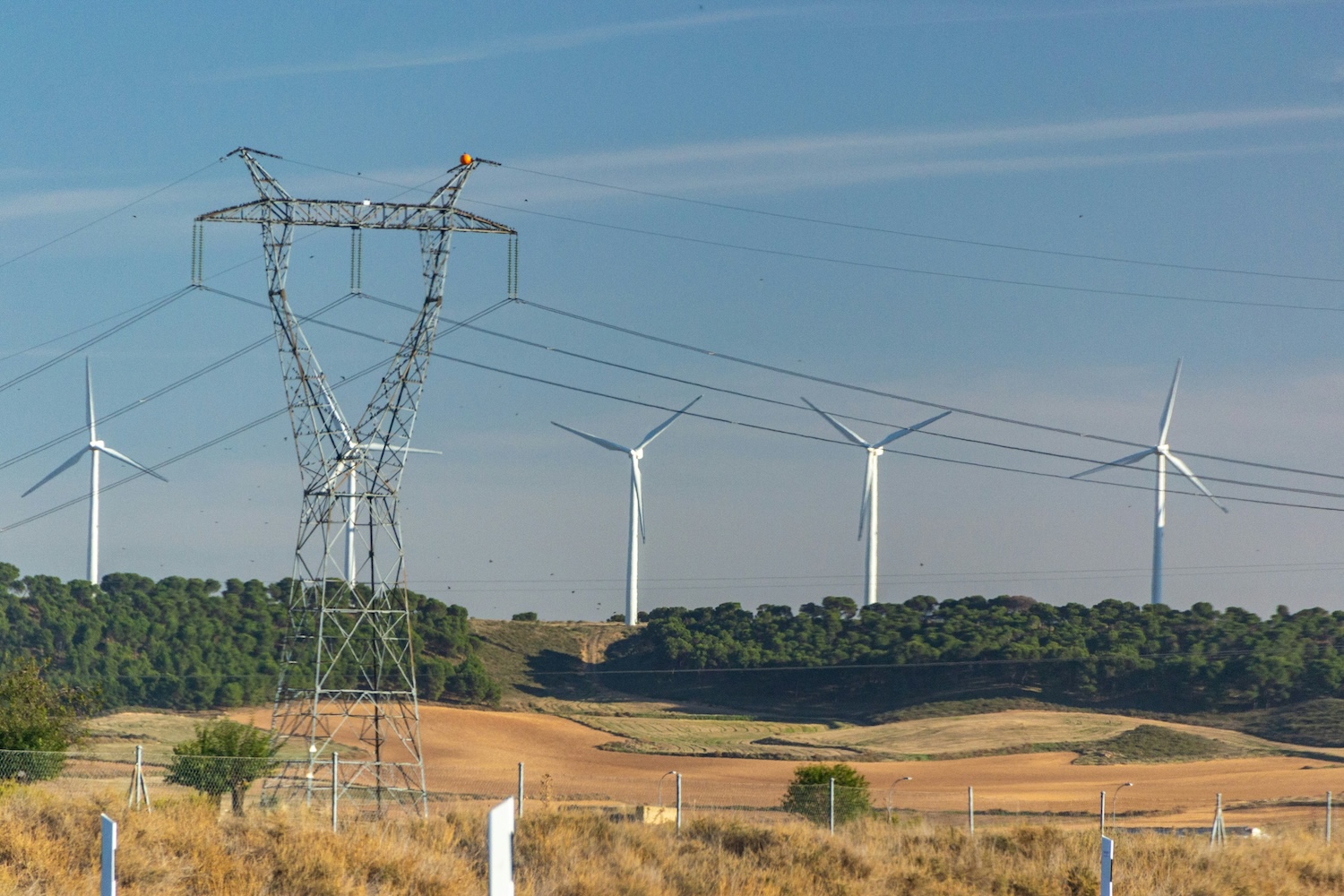
Grid congestion is no longer a localized or temporary issue in Europe. Markets such as Germany, Spain, the Netherlands and parts of the Nordics are experiencing increasing curtailment events as renewable generation concentrates geographically while grid reinforcements lag behind.
ENTSO-E, through its Ten-Year Network Development Plan (TYNDP 2026), recognizes that grid expansion has become the primary bottleneck of the energy transition. Yet most reinforcement projects will only materialize after 2027 or 2028.
For asset owners and operators, this means that curtailment risk in 2026 is systemic, not exceptional. The key challenge is no longer avoiding curtailment entirely, but managing it with precision: quantifying losses, identifying root causes and integrating this information into commercial and regulatory decision-making.
Without high-resolution operational data, curtailment becomes an invisible erosion of revenue.
Data centers: a new structural demand driver in the European power system
The rapid expansion of data centers is becoming one of the most significant sources of electricity demand growth in Europe on the way to 2026. Driven by cloud computing, artificial intelligence, and the digitalization of the economy, energy-intensive data centers are taking on a central role in markets such as Germany, Ireland, the Netherlands, Spain, and the Nordic countries.
Unlike most industrial consumers, data centers require continuous, highly reliable power supply with near-zero tolerance for interruptions, while also facing increasing pressure to source electricity from renewable origins to meet ESG commitments and regulatory requirements. This substantially raises the bar for renewable assets aiming to serve this segment.
In practice, the growth of data centers is accelerating the adoption of long-term corporate PPAs, often with more sophisticated structures that combine renewable generation, exposure to hourly price signals, and, increasingly, hybrid solutions that integrate battery storage. For operators, this brings new challenges related to generation predictability, temporal correlation between supply and demand, and exposure to curtailment in congested grid areas.
Moreover, the geographic concentration of data centers in specific hubs is intensifying local grid constraints, leading transmission system operators to impose stricter connection conditions or delay grid access in certain regions. In several European markets, the rapid growth of digital load is already translating into longer connection timelines, higher grid reinforcement costs, and increased regulatory complexity.
In this context, high-resolution operational data and advanced performance intelligence become strategic assets. The ability to anticipate system constraints, quantify operational impacts, and demonstrate control over asset performance is increasingly decisive for securing data-center-linked PPAs and protecting project economics.
By 2026, data centers move beyond being just large electricity consumers and become structural anchors of demand, shaping investment decisions, project location, PPA design, and the overall operational logic of the European power system.
Flexibility and battery storage move to the center of system reliability
The growing mismatch between generation profiles and demand patterns accelerates the role of flexibility. Battery Energy Storage Systems (BESS) move from pilot deployments to strategic infrastructure across Europe.
By 2026, storage is increasingly deployed to manage intraday price volatility, reduce curtailment exposure and support grid stability services. Markets are evolving to remunerate flexibility explicitly, while hybrid projects combining solar, wind and storage gain traction in merchant and PPA-backed portfolios.
Operationally, this marks a turning point. Assets are no longer optimized in isolation. Generation, storage and grid conditions must be analyzed together, demanding more advanced operational intelligence and cross-asset coordination.
Offshore wind scales, but operational complexity increases
Offshore wind remains one of Europe’s most strategic renewable pillars. Large-scale projects in the North Sea and Baltic Sea reach commissioning milestones around 2026, reinforcing Europe’s long-term supply resilience.
Yet scale brings complexity. Larger turbines, longer export cables and hybrid offshore connections increase operational risk exposure. At the same time, ports, vessels and grid landing points remain constrained, amplifying sensitivity to delays and outages.
In this context, offshore performance is no longer measured only by availability, but by the ability to anticipate constraints, optimize maintenance windows and coordinate with grid operators.
Hydrogen infrastructure links renewables to industrial demand
Green hydrogen becomes operationally relevant in 2026, not just as a policy ambition but as infrastructure. The European Hydrogen Bank auctions and projects such as Germany’s hydrogen core network begin to connect renewable generation to industrial offtakers.
This integration increases the strategic value of predictable renewable output. Electrolyzers require stable, well-characterized supply profiles, pushing renewable operators to adopt more rigorous performance forecasting and operational planning.
Here again, data becomes a commercial asset. Poor visibility into real generation behavior translates into higher risk premiums and weaker contract positions.
Corporate PPAs demand predictability, not just green labels
Corporate Power Purchase Agreements remain a major driver of renewable investments in Europe. However, by 2026, buyers are more sophisticated. They increasingly demand not only renewable guarantees, but delivery profiles aligned with their consumption patterns, particularly for data centers and industrial loads.
This evolution shifts pressure onto operators. Merchant exposure, negative price events and curtailment risks must be actively managed to protect PPA economics. The ability to demonstrate operational control and loss attribution becomes a differentiator in competitive PPA negotiations.
Digitalization becomes a survival requirement for O&M teams
Across all these trends, one common thread emerges: operational complexity is outpacing traditional monitoring approaches. In 2026, digitalization is no longer about dashboards. It is about transforming raw operational data into actionable insights that support technical, financial and regulatory decisions.
Advanced analytics, predictive models and system-level intelligence enable teams to anticipate losses instead of reacting to them. This capability increasingly separates resilient portfolios from underperforming ones.
What changes in practice for O&M leaders in 2026
For O&M and asset management teams, Europe’s renewable landscape in 2026 demands a shift in mindset. Performance is no longer defined solely by turbine availability or inverter uptime. It is defined by how well assets interact with the power system.
Leaders must connect operational data to revenue impact, understand grid-driven constraints and equip their teams with tools that support proactive decision-making. Those who fail to adapt risk operating blind in a system that no longer forgives inefficiency.
The renewable energy transition in Europe enters its most demanding phase in 2026. Growth continues, but value creation moves decisively toward operational intelligence, flexibility and predictability.
Assets that are well-instrumented, well-understood and actively managed will outperform in a system marked by congestion, volatility and regulatory pressure. Those that are not will increasingly see performance slip between technical metrics and financial reality.
If your portfolio already feels the impact of curtailment, grid constraints or volatile prices, the next step is not more monitoring, but better operational intelligence.
Talk to Delfos and see how advanced analytics and performance intelligence help renewable operators across Europe anticipate losses, improve decision-making and protect revenue in complex power systems.
Book a meeting
Let's connect and forge new partnerships
Custom Renewable Energy Solutions
Contact us today and join global operators who recovered up to 10% revenue and cut downtime by 18%