
Delfos Diagnosis Prevents Critical Failure: Generator Misalignment Correction and Shaft Spring Failure in Suzlon Model WTG

Context
The Suzlon turbine, located in the subparque of one of our clients, began to show subtle temperature deviations in the generator coupling bearing, starting on August 13, 2025.
The scenario significantly worsened from October 31, 2025.
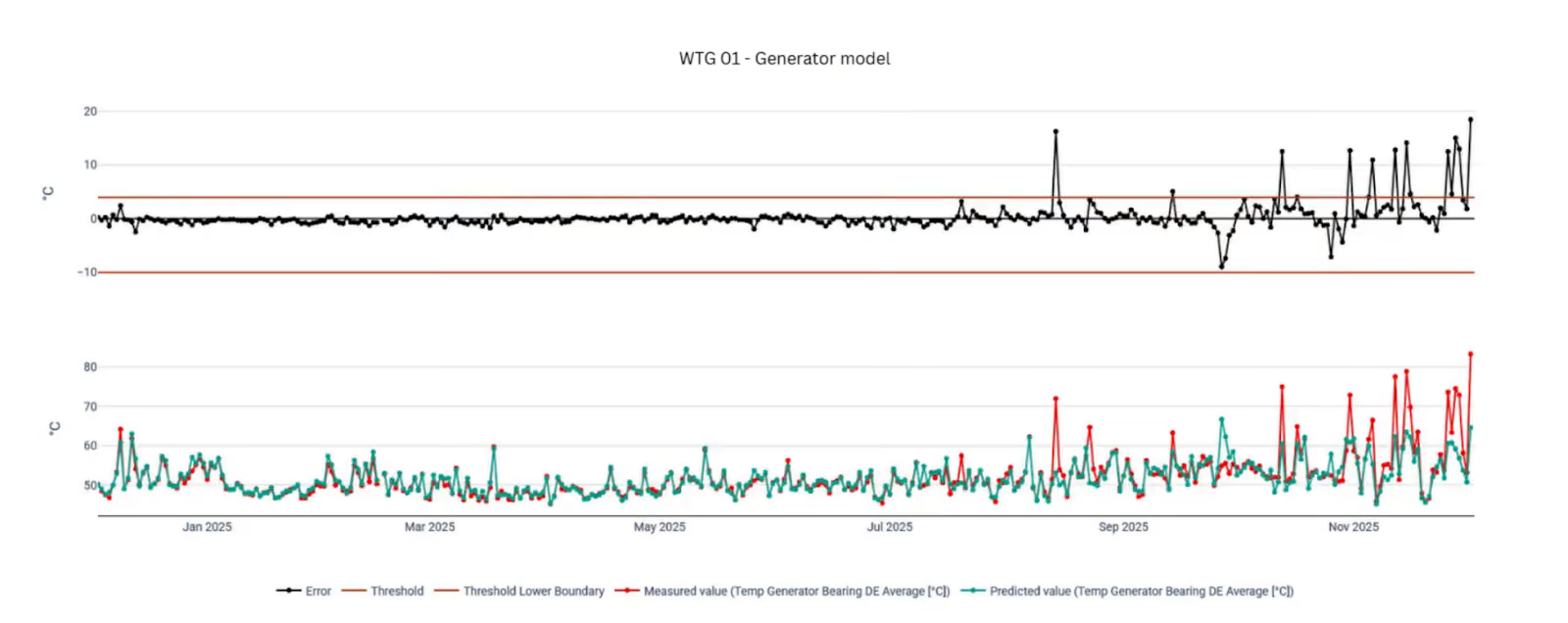
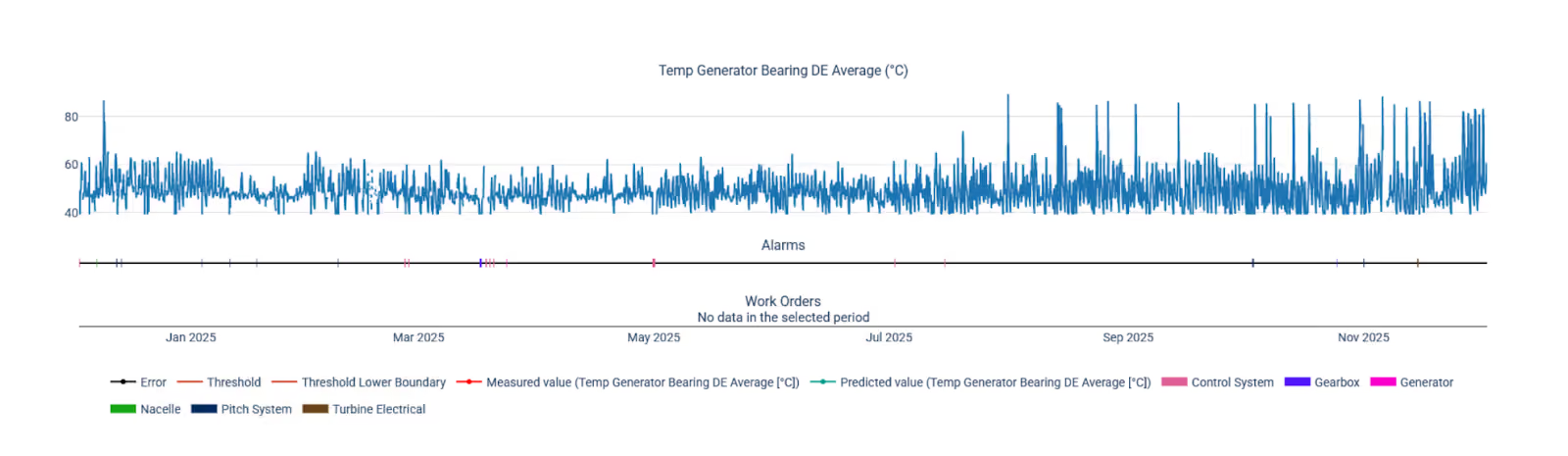
During this period, thermal peaks intensified, and the turbine began operating frequently with temperatures exceeding 85 °C in this bearing.
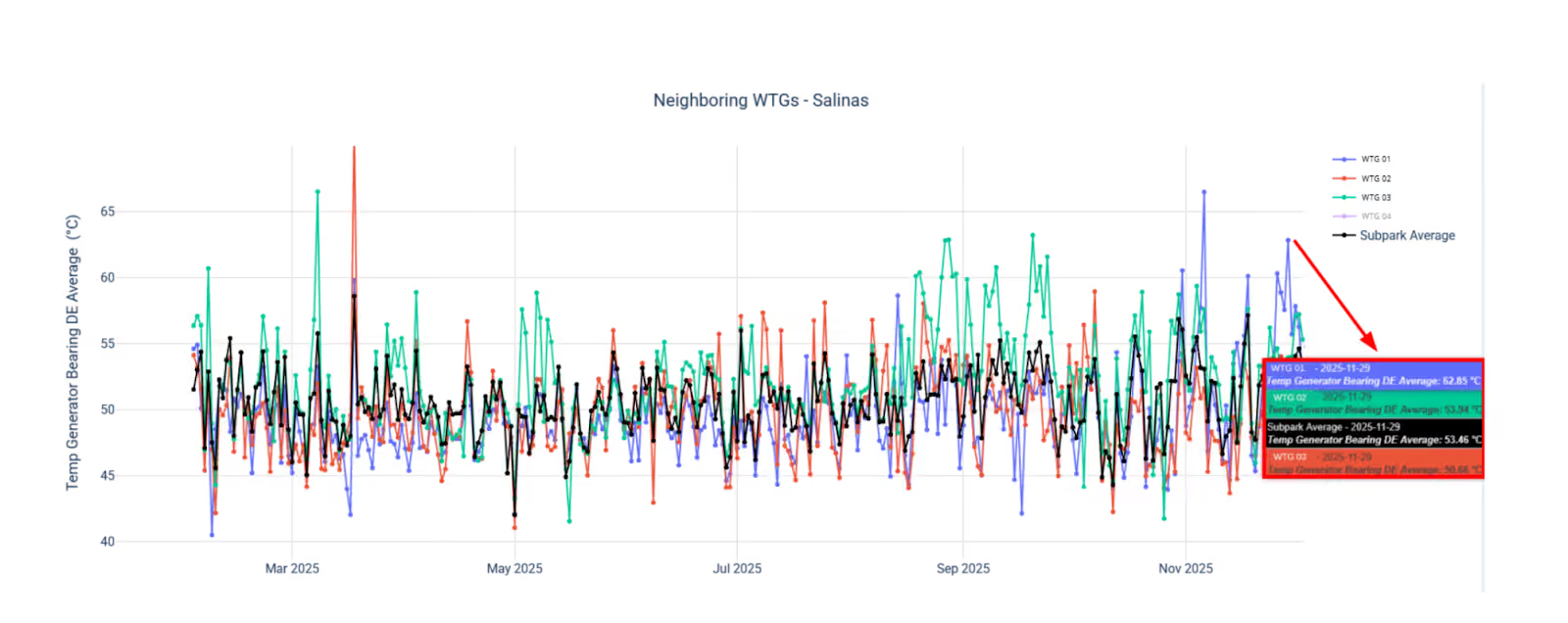
After this date, the WTG started to stand out from the neighboring turbines, presenting a delta of approximately 10°C above the sub-park average.
In the bearing not coupled to the generator, temperatures above 90°C were also observed, which indicates a critical operating condition.
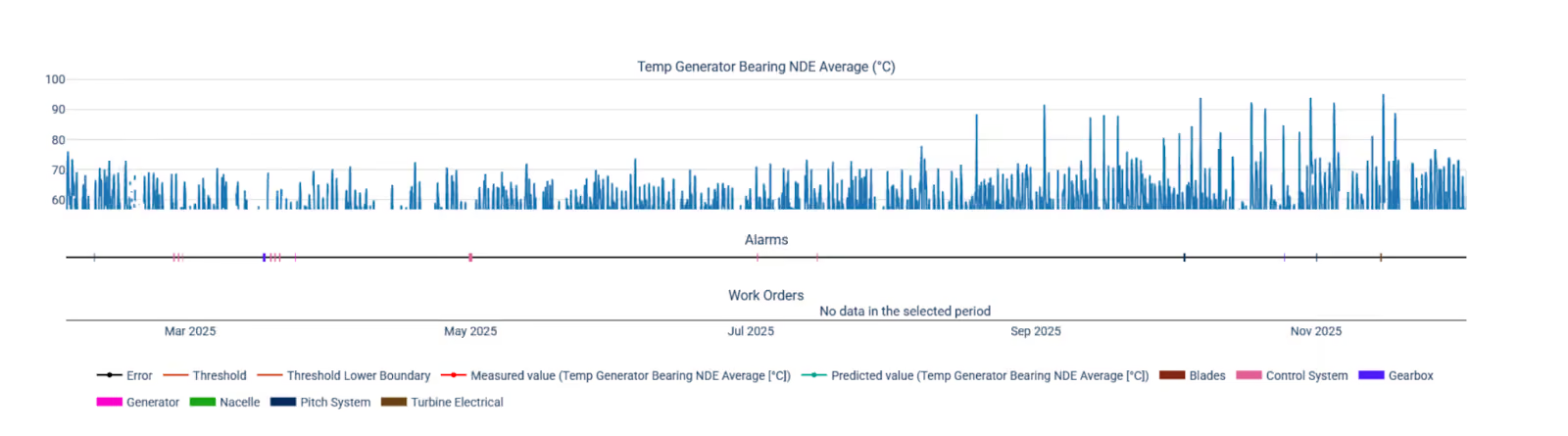
Operating with both generator bearings at such high temperatures evidenced a critical operating condition and imminent mechanical stress.
Implemented Solution
To thoroughly investigate the anomaly and diagnose the true cause of the overheating, data intelligence from the Delfos Platform was used with the following approach:
Prediction Module: as a trigger, predictive alarms were used and the analysis proceeded in the prediction module
Comparative Analysis of Neighbors: when comparing the behavior of BV-1 with neighboring turbines in the subparque, the machine stood out for being outside the pattern of the others. After 10/31/2025, the turbine showed a thermal increase, operating with a delta of approximately 10°C above the thermal average of the other machines in the subparque.
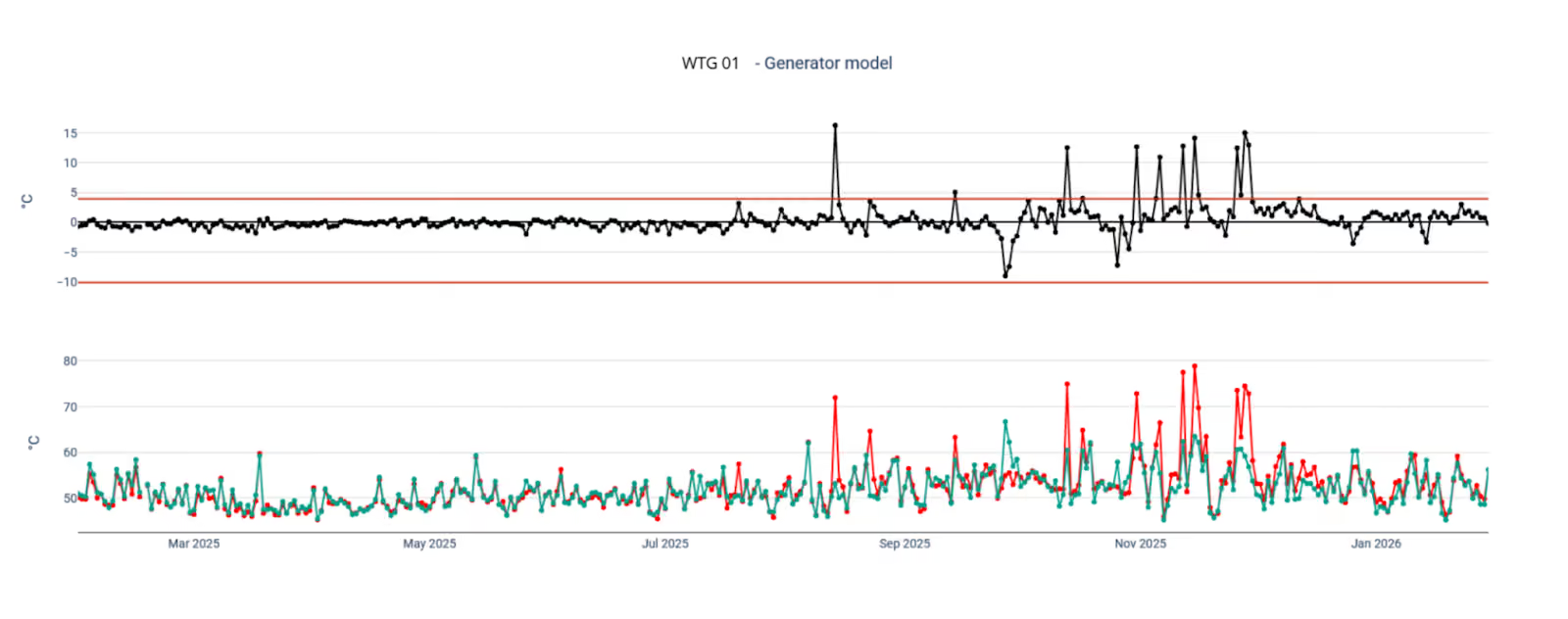
Based on this strong data evidence pointing to stress on the generator components, the client's team was contacted and carried out a physical corrective intervention in the field.
The on-site diagnosis confirmed the mechanical cause of the severe overheating observed in the graphs: a generator misalignment and the need to replace the shaft spring.
Results Achieved
The intervention, based on the guidance of the Delfos Performance Engineering team, was assertive. The client's team executed the correct generator alignment and replaced the shaft spring.
- Immediate Thermal Normalization: after the completion of the actions in the field, the temperatures of both generator bearings ceased peaking above 85 °C/90 °C, allowing the component's proper functioning to be re-established. The corrections demonstrated that the temperatures returned to follow the predictive model, pointing to the assertiveness of the model's learning.
- Mitigation of Operational Risk: the detection of the misalignment and the correction carried out prevented the premature breakage or collapse of the generator bearings due to thermal and mechanical fatigue, protecting the turbine components.
- Safe Continuity: the machine was able to return to its operating profile safely, free from continuous operational stress.
Conclusion
This case highlights the vital value of monitoring and tracking components and sub-components of wind turbines. A physical misalignment and a shaft spring failure are essentially mechanical defects that do not have direct sensors to warn about the need for replacement.
Only by correlating the progressive temperature increase, and cross-referencing this information with the behavior of neighboring turbines, was the Delfos Platform able to map the invisible degradation in advance (since August). The joint action with the client's team transformed a high potential damage corrective event into a controlled structural intervention.
Key Data
- > 90 °C: critical and dangerous temperature reached by the non-drive end bearing, before maintenance;
- > 85 °C: excessive thermal frequency of the drive end bearing, observed during the anomalous period;
- + 10 °C: thermal delta of the turbine in direct comparison with the average of neighboring turbines in the subparque;
- Early Predictive Alert: first signs of anomaly captured on 08/13/2025, more than two months before the critical failure peak in October.
Book a meeting
Let's connect and forge new partnerships
Custom Renewable Energy Solutions
Contact us today and join global operators who recovered up to 10% revenue and cut downtime by 18%