
How Delfos' Prediction module prevented the loss of a component in a Vestas WTG model
Context
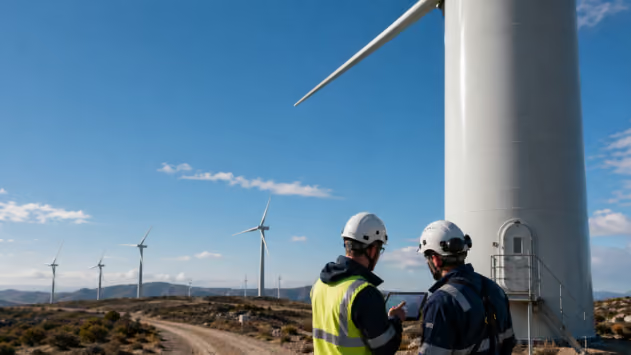
A turbine (Vestas V100 model), operated by one of our customers, had been exhibiting abnormal behaviour since 25 October. On 1 November 2025, the error exceeded the confidence threshold, indicating that the anomaly that had begun earlier was already sufficient to trigger a predictive alert.
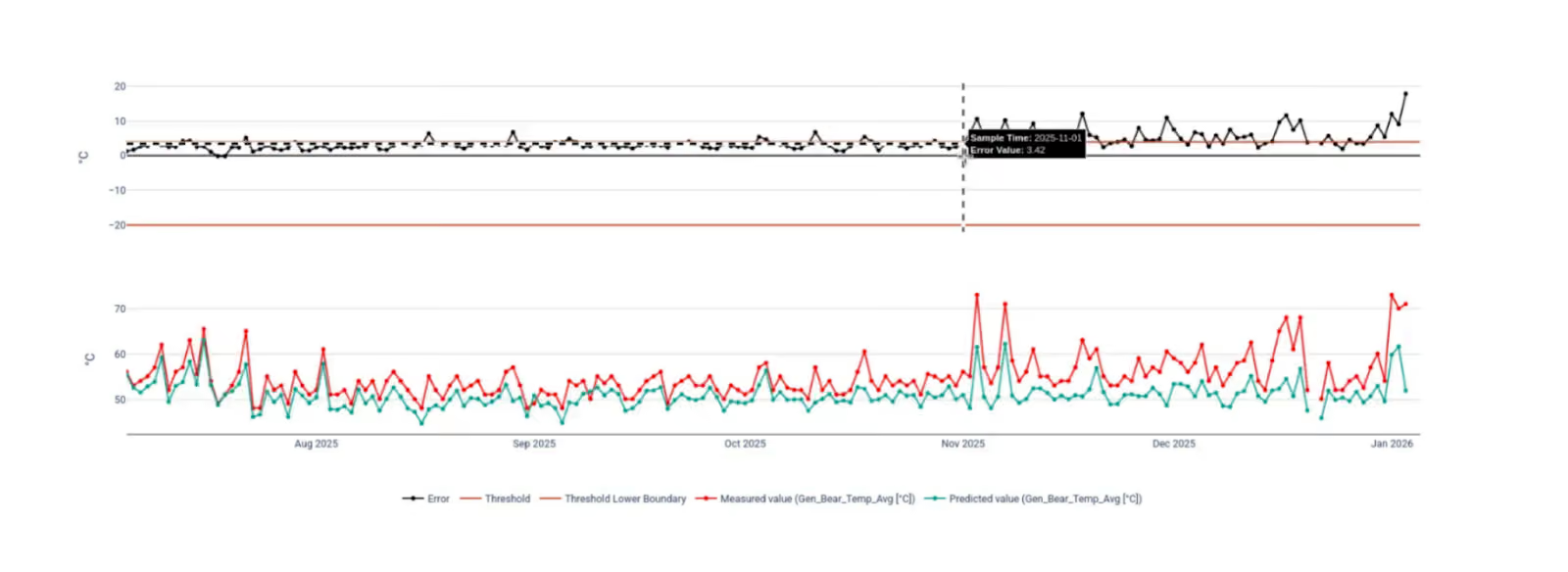
The initial alert was generated due to an atypical behavior of the generator-coupled bearing (Generator Front Bearing/DE Bearing).
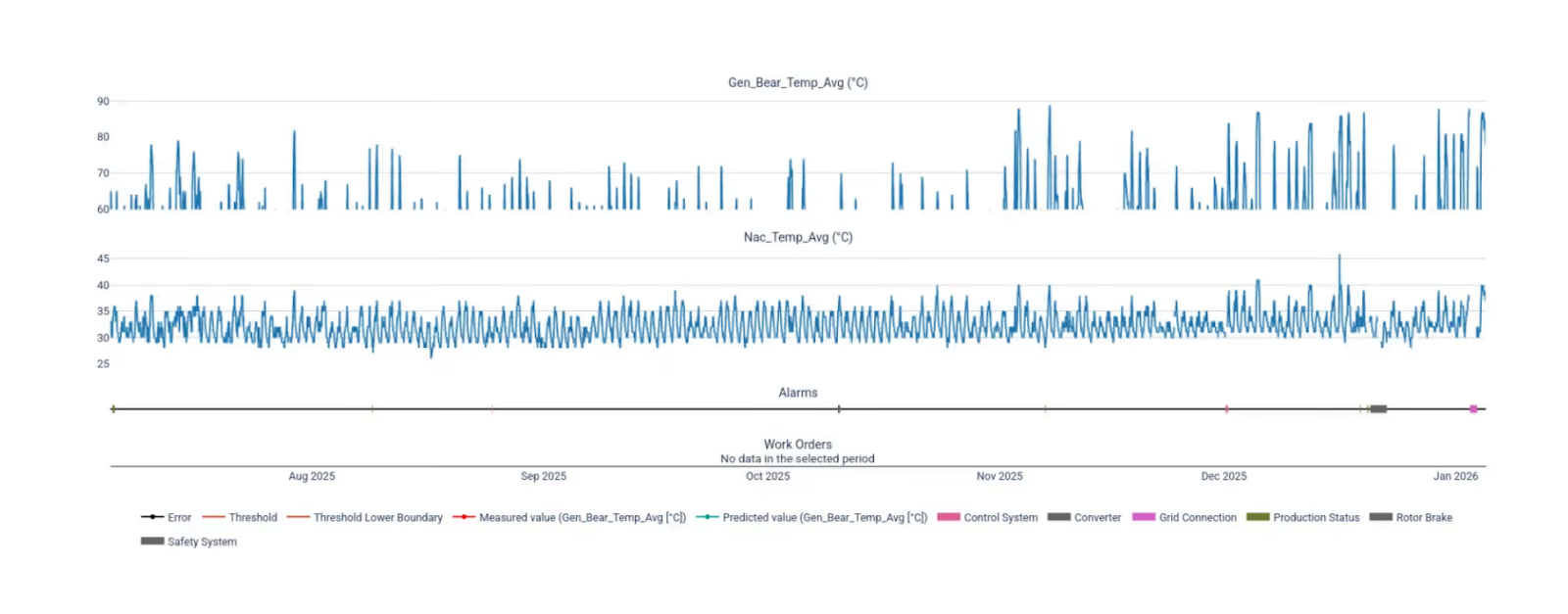
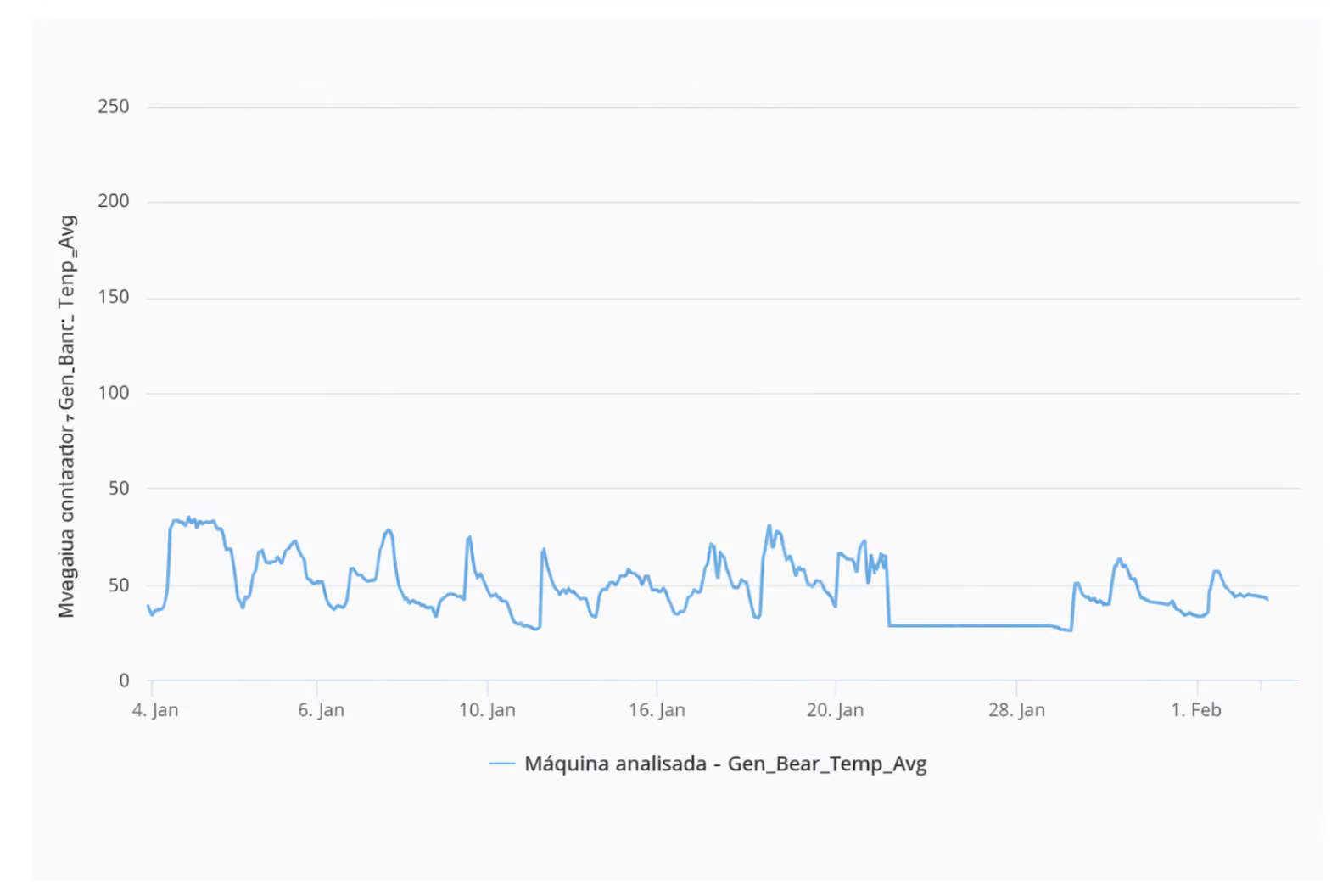
The severity of the thermal deviation was consolidated in the following months. The temperature of this specific bearing began to exceed the critical mark of 70 °C, moving further and further away from the expected safe behavior.
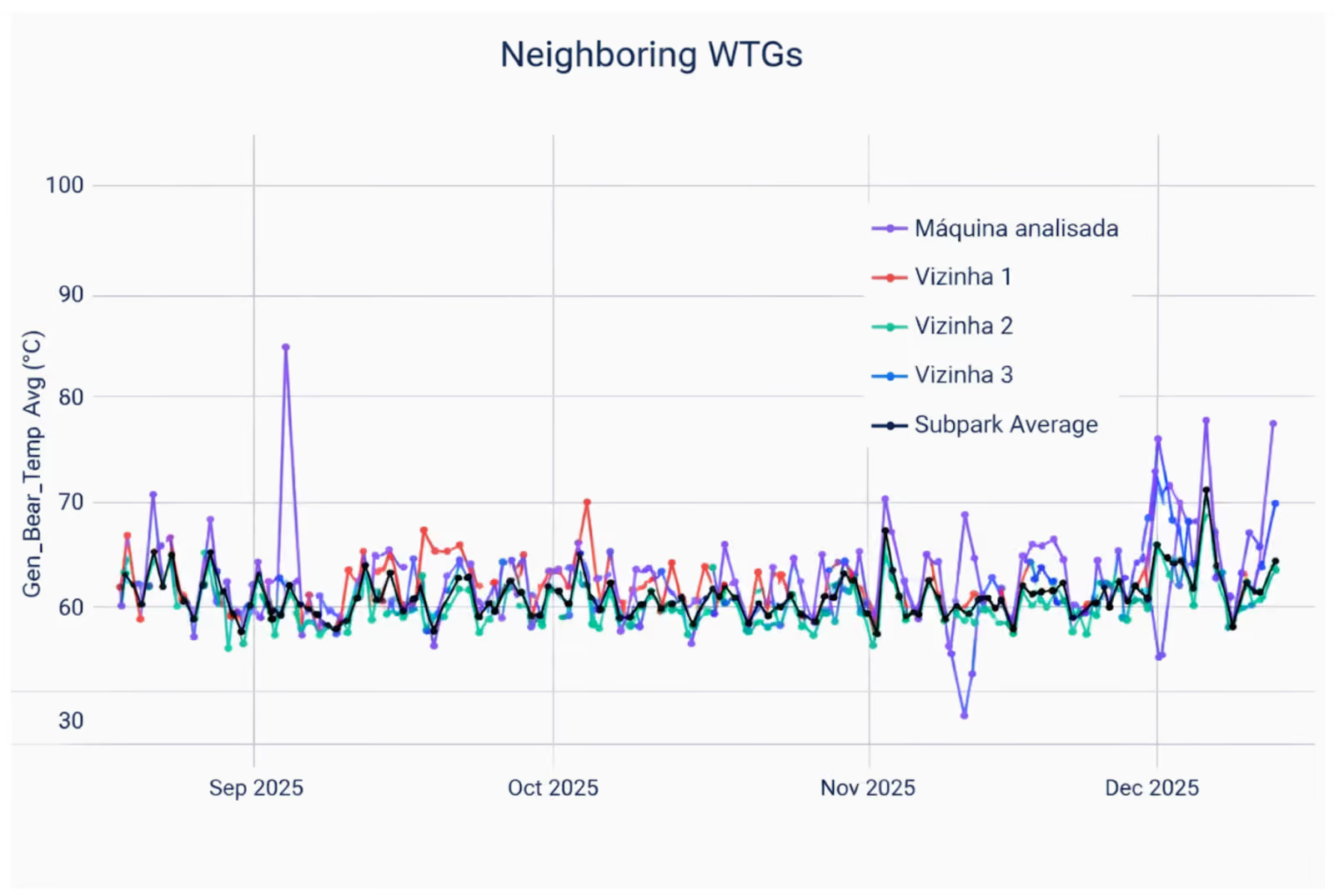
In January 2026, the situation became even more apparent at the wind farm level: when compared with the other turbines in the sub-farm, the turbine in question stood out as the machine operating at the highest temperature in this component.
Implemented Solution
The diagnostic capabilities of the Performance Engineering team were directly supported by the data analytics of the Delfos platform:
- Prediction Module: this was the key tool for the early detection of the fault. The mathematical model identified a persistent and growing discrepancy between the ‘measured’ and ‘predicted’ values for the front bearing temperature from November onwards;
- Neighbour Analysis: cross-referencing the time series data between neighbouring turbines visually confirmed that the overheating was not an environmental condition affecting the sub-park, but a physical anomaly restricted to the turbine under assessment.
- Strategic Monitoring: with the diagnostic report provided in advance to the O&M team, the component was placed under continuous monitoring. Consequently, when the turbine recorded the forced shutdown event on 20 January 2026, triggered by the ‘high generator temperature’ alarm, the fault had already been mapped, allowing for a controlled and planned intervention.

Achieved Results
The advance guidance provided by predictive analytics ensured that the maintenance team arrived on site with the correct diagnosis, thereby optimising repair time:
- Validação da causa raiz: a inspeção no local confirmou os danos mecânicos no rolamento do gerador, exigindo sua substituição imediata.
- Extended Corrective Action: prior knowledge of the fault enabled a more thorough on-site investigation of the generator system. Collateral damage was identified, necessitating a complex intervention that included the grinding of the generator shaft.
- Rapid Return to Operation: thanks to the planning made possible by the early warning and the precise diagnosis of the affected component, the turbine was able to undergo all the highly complex corrective maintenance (bearing replacement + grinding) and return safely to operation on 29 January 2026.
Conclusion
This case highlights the critical importance of predictive monitoring for major components. Although the turbine eventually shut down due to overheating, the interval of almost three months between the first alert from Delfos (1 November 2025) and the shutdown (20 January 2026) completely changed the maintenance scenario. The customer avoided a serious failure, which could have resulted in further damage to the equipment, by taking a controlled approach to replacing the bearing and resurfacing the shaft.
Key Data
- ~3 months’ lead time in identifying the deviation (November 2025 to January 2026).
- > 70 °C was the consistent abnormal temperature identified in the coupled bearing.
- Damage diagnosed during a surgical inspection, resulting in the replacement of the bearing and grinding of the shaft.
- 9 days was the total downtime from the shutdown (20/01) until the return to operation (29/01) following a complex intervention.
Book a meeting
Let's connect and forge new partnerships
Custom Renewable Energy Solutions
Contact us today and join global operators who recovered up to 10% revenue and cut downtime by 18%