
Hidden Loss Prevention and Projected Recovery of 48.6 MWh in a Solar Plant
Context
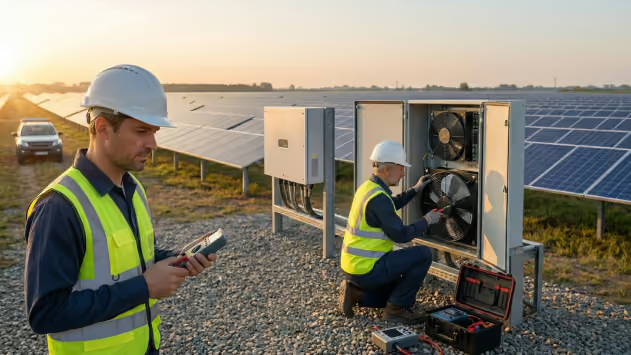
During continuous monitoring of one of our client's solar plants, the Delfos Performance Engineering team identified an anomalous behavior in the INV 2113 inverter.
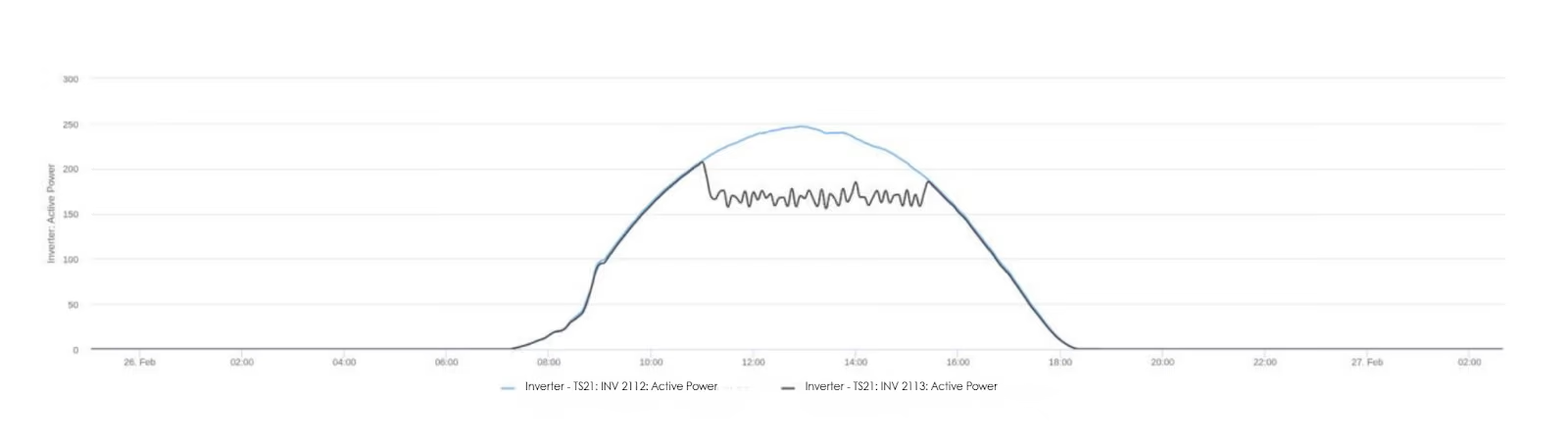
Comparing this equipment with other inverters connected to the same transformer station, it became evident that the INV 2113 showed recurrent active power drops, resulting in lower energy generation than expected.
A detailed analysis of the active power curve revealed that these power reductions occurred multiple times specifically during the central hours of the day, precisely the period of highest irradiance, when the inverter should operate close to its nominal capacity.
Implemented Solution
To understand the root cause of the underperformance without the need for an inspection lacking major evidence, the team used the Analyses and Alarm Timeline Modules of the Delfos Platform. This allowed overlaying the active power timeseries with the equipment's alarm timeline.
- Event Correlation: It was observed that, at the exact moments of power drops, the system registered fan alarms related to the inverter.
- Remote Diagnosis: The strong correlation between the fan alarms and the power drops clearly indicated that the inverter was entering a thermal power limitation mode (thermal derating), automatically reducing its energy output to prevent the internal components from overheating.
With a data-driven diagnosis, the performance team reported the behavior to the client and recommended a field intervention specifically targeting the cooling system of INV 2113.
Results Achieved
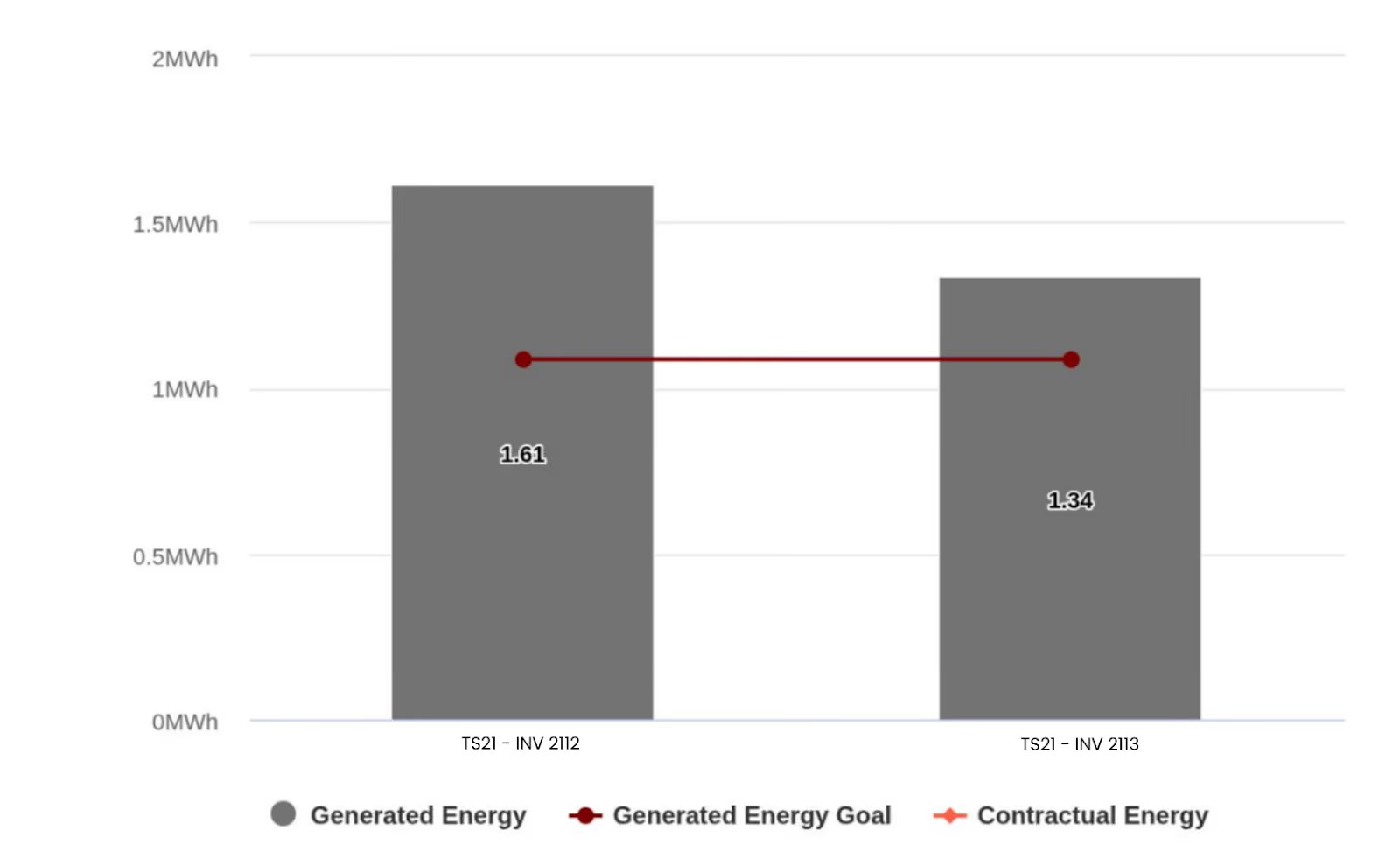
To gauge the urgency of the maintenance and the financial impact of the failure, the team quantified the daily losses by comparing INV 2113 with a healthy mirror equipment operating under the same conditions (INV 2112):
- Daily Impact: on the day analyzed, the healthy inverter (INV 2112) generated 1.61 MWh, while the equipment with cooling failure (INV 2113) produced only 1.34 MWh.
- Performance Deficit: this difference represents a loss of 0.27 MWh in a single day, which is equivalent to a performance reduction of approximately 16.8%.
- Projected Loss Avoided: assuming similar operational conditions, it was calculated that this thermal limitation would result in a projected generation loss of approximately 48.6 MWh over a six-month period, should the problem not be mitigated.
Correcting the ventilation system will ensure that the inverter returns to normal operating conditions, eliminating the thermal limitation, stopping the power drops, and aligning its output with that of the other inverters at the station.
Conclusion
This case accurately illustrates how continuous monitoring, power profile analysis, and alarm correlation within the Delfos platform enable operational limitations to be identified quickly.
Instead of discovering the fault only after months of underperformance reflected in financial reports, the customer was able to direct its maintenance team to take precise and efficient action, preventing potential long-term generation losses.
Key Data
- 48.6 MWh of projected (and avoidable) energy loss over a six-month period;
- 16.8% reduction in generation performance identified during daily analysis;
- 0.27 MWh of energy lost in a single day due to thermal protection mode;
- Accurate diagnosis linking the drop in performance to a failure in the cooling system.
Book a meeting
Let's connect and forge new partnerships
Custom Renewable Energy Solutions
Contact us today and join global operators who recovered up to 10% revenue and cut downtime by 18%