
How Variable Correlation Prevented the Fatigue of an Enercon E82 Wind Turbine
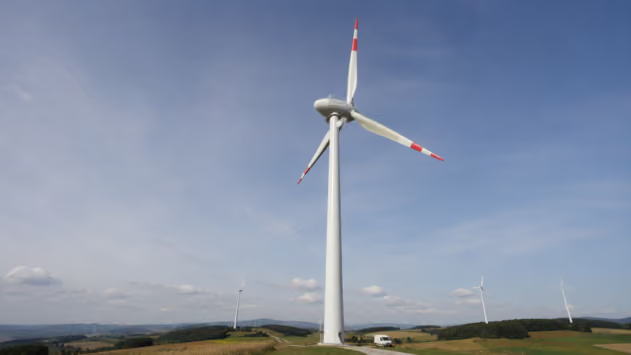
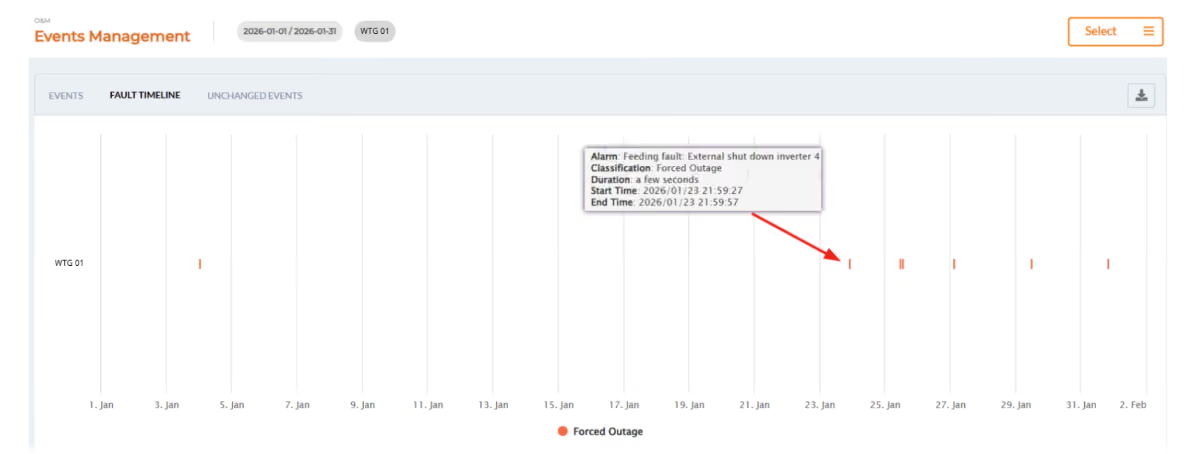
During the continuous monitoring of a wind farm, the WTG01 turbine (Enercon E82 model), operated by one of our clients, began logging the alarm "Feeding fault: External shut down inverter 4" starting on January 23, 2026. By the end of that month, approximately 6 events had been recorded.
In Enercon turbines, downtime alarms feature an automatic reset system. When an error occurs, the machine restarts and the alarm displays an immediate end time, lasting only a few seconds. This masks the anomaly from the operations teams, as the turbine quickly resumes generating power. However, this reset logic does not apply to all occurrences. After a certain number of events, the alarm becomes permanent, requiring manual reset (remote or on-site) and resulting in long periods of downtime.
Implemented Solution
To prevent the turbine from reaching the automatic shutdown limit and suffering mechanical and electrical wear from intermittent stops, the Performance Engineering team used the Delfos platform to investigate the anomaly:
- Event Analysis (Events Management): the tool mapped the silent history of short-duration shutdowns (Force Outages lasting a few seconds), revealing the exact frequency of inverter 4 occurrences;
- Multivariable Correlation (Timeseries): by cross-referencing alarm behavior with analog variables, it became evident that the failures were not random. The platform proved that the temperatures of the Power Cabinets rose in direct response to the elevation of ambient temperature, and, sequentially and temporally, the inverter alarms were triggered immediately after these thermal peaks.
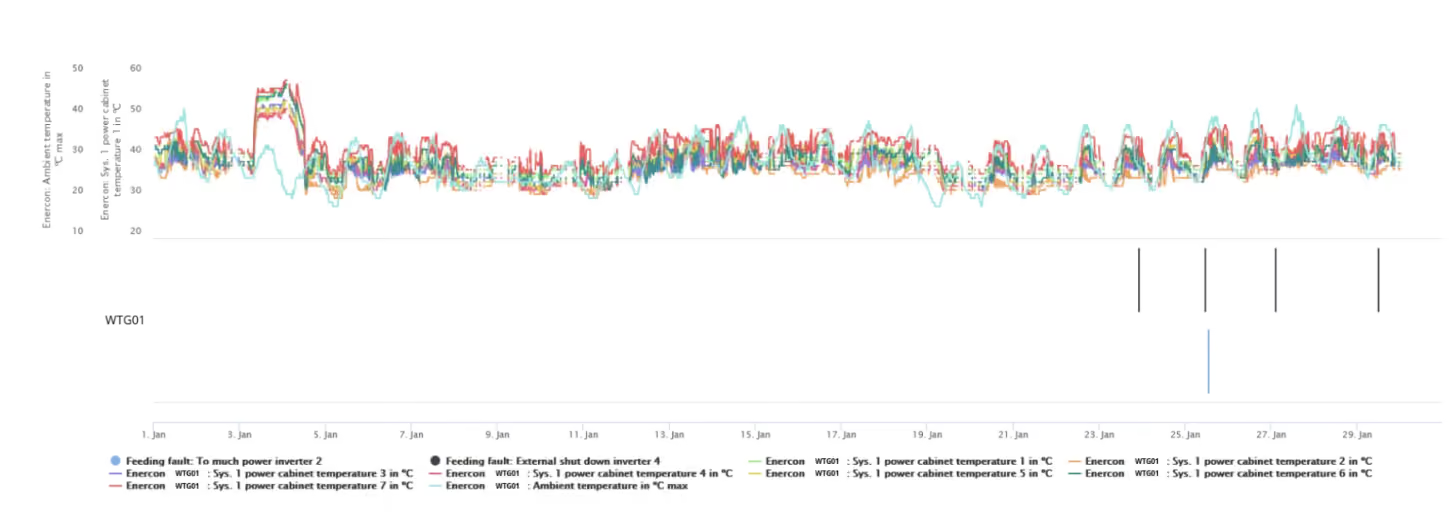
- Strategic Monitoring: with the diagnostic report of the inverter's behavior provided to the O&M team in advance, the fault was placed under continuous monitoring. This ensured that the operation understood the physical condition of the asset, allowing for the planning of a preventive action instead of an emergency reaction to a definitive lockdown.
Achieved Results
The data-driven diagnosis allowed the intervention to be assertive, preserving the asset's lifespan and minimizing energy losses:
- Exact Corrective Action: armed with the diagnosis, the field team carried out the scheduled intervention on February 24, 2026, replacing the inverter 4 board, the component whose failure was triggered by overheating.
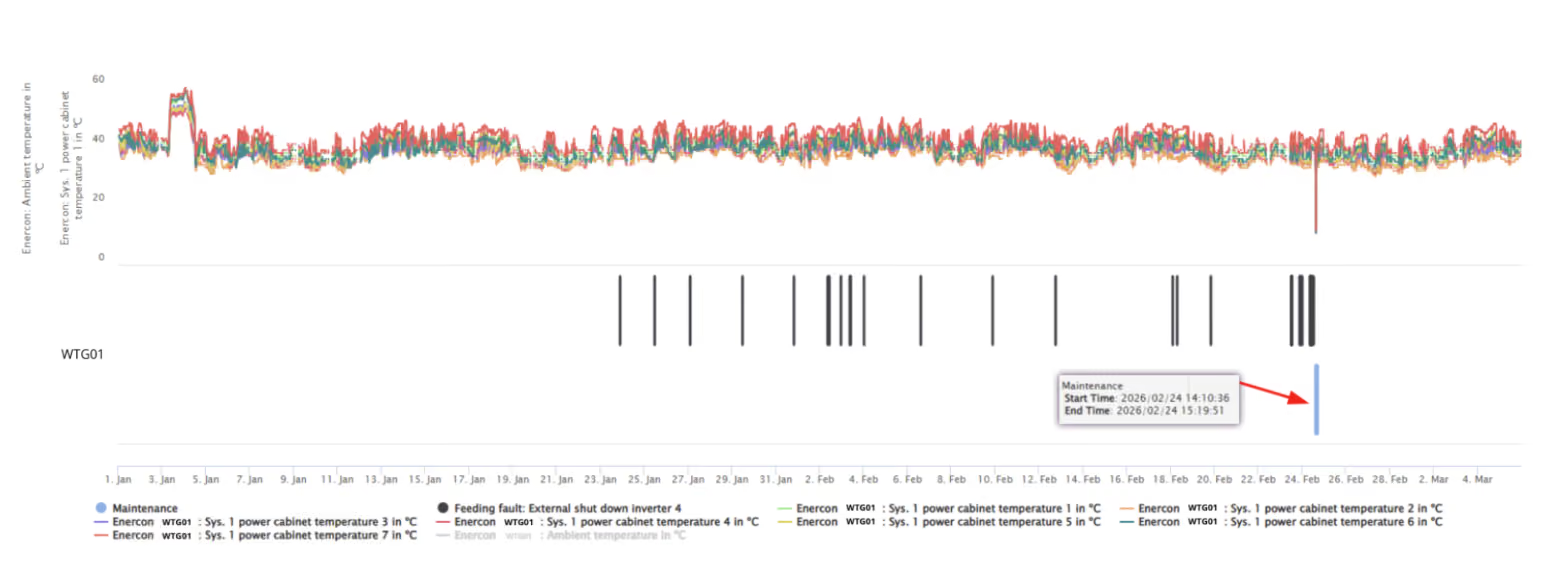
- Mitigation of Financial Impact: by identifying the problem early and monitoring short outages, energy losses related to this failure over the entire period were limited to just 460.47 kWh (less than 0.5 MWh). The diagnosis prevented the problem from escalating into a prolonged period of downtime.
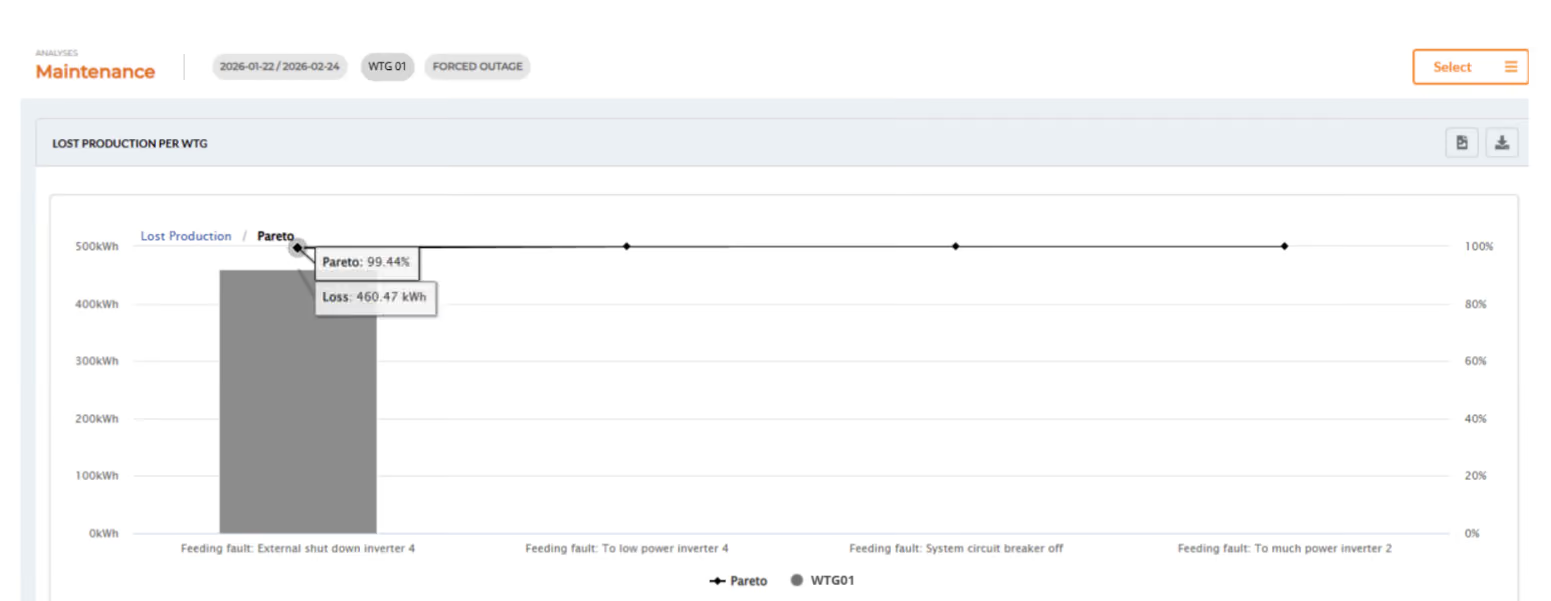
- Asset Preservation: early intervention interrupted the turbine’s cycle of automatic shutdown and restart, preventing the severe structural and electrical fatigue that this intermittent behavior causes to the equipment.
Conclusion
This case highlights the limitations of relying solely on the “generating” or “stopped” statuses of traditional SCADA systems, especially in machines with automatic reset. The Delfos platform’s ability to correlate external and internal temperature variations with the triggering of a specific electrical alarm provided the customer with the true root cause. This transformed a dangerous intermittent behavior into a simple board replacement order, ensuring extremely high availability of the Enercon E82 turbine.
Key Data
- Prescriptive Action: Precise replacement of inverter board 4 based on cross-referenced temperature and event data.
- < 0.5 MWh (460.47 kWh): Total energy saved, demonstrating the effectiveness of rapid action and damage containment.
- Protection Logic: Predictive intervention before the turbine reached the limit of 10 automatic resets and shut down completely.
- Fatigue Prevention: Elimination of the cycle of short automatic shutdowns that are harmful to the mechanical/electrical integrity of the machine.
Book a meeting
Let's connect and forge new partnerships
Custom Renewable Energy Solutions
Contact us today and join global operators who recovered up to 10% revenue and cut downtime by 18%